
When you see cargo vehicles traveling on urban roads and highways, you may wonder why these large freight vehicles are universally called trucks.
Though they serve as the backbone of material transportation, their name is not as literal as “freight vehicle”. The term truck may seem simple, yet it carries unique linguistic origins, historical evolution and industry conventions.
In this article, we will explain how these vehicles got the name truck, as well as the stories and industry significance behind the term.
What Is a Truck?
A truck is a motor vehicle specially designed for cargo transportation. It mainly consists of a cab, chassis, power system and cargo loading unit, distinct from passenger cars and buses built to carry people.
In definition, all motor vehicles focused on freight transportation fall into the category of trucks. This includes small light-duty delivery vehicles for urban and rural distribution, as well as heavy-duty long-haul vehicles for cross-country freight.
Its core function is goods delivery. Every structural and power design of a truck is engineered for heavy load capacity and high-efficiency transportation, making it the most fundamental andessential means of land logistics.
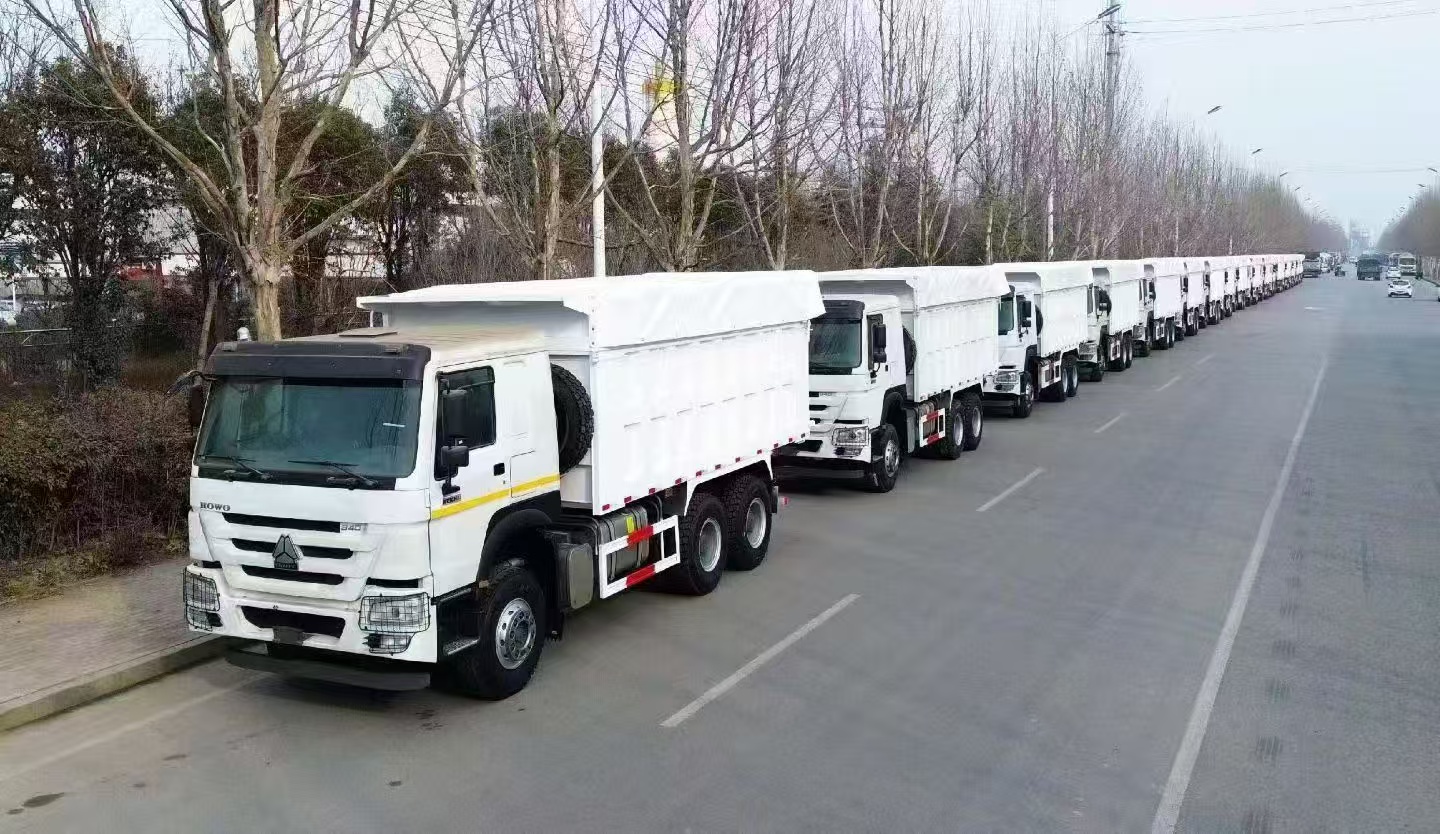
The Origin of the Word Truck
The term truck is not an original Chinese word; it is a transliteration of the English word truck — its core origin.
When automobiles were first introduced to China in modern times, small passenger vehicles were named “sedans”, while large freight vehicles were collectively referred to as truck in English. Due to its similar pronunciation, the concise transliteration truck became widely adopted.
Etymologically, the ancient meaning of the English word truck referred to heavy wheeled carts and freight wagons. With the popularization of motor vehicles, it was specifically used to define motor freight vehicles. Concise and easy to pronounce, the transliteration truck quickly gained popularity in daily communication and industrial sectors.
In short, the Chinese name for this vehicle comes directly from the English truck, a label that accurately represents its identity as a freight motor vehicle.
Differences Between Trucks and Freight Vehicles
Core Naming Logic
Truck: A transliterated name derived from English truck, following international naming standards.Freight Vehicle: A semantic name created in Chinese, directly reflecting the core function of transporting goods.
Usage Scenarios
In daily conversations and general public contexts, people prefer using truck for its simplicity and fluency.In national traffic regulations, official documents, vehicle registration and industrial specifications, freight vehicle is the standard formal term.
Coverage Scope
The two terms refer to the exact same type of vehicle with no essential difference. All freight motor vehicles are both trucks and freight vehicles, differing only in naming origin and application scenarios.
Core Classifications of Trucks
Classification by Load Capacity
· Light-duty Trucks: Compact size, ideal for short-distance urban parcel and commodity delivery.
· Medium-duty Trucks: Balanced load capacity and flexibility, widely used for short and medium-distance intercity transportation.
· Heavy-duty Trucks: Built for extreme load-bearing, serving long-distance trunk logistics and bulk engineering material transport.
Classification by Cargo Body Type
· Flatbed Trucks: Equipped with open side rails for universal use and convenient loading and unloading of bulk materials and construction supplies.
· Box Trucks: Fully enclosed cargo compartments that provide rainproof and anti-theft protection for express packages, home appliances and high-value goods.
· Stake Trucks: Fenced structures with good ventilation, suitable for fruits, vegetables, livestock and feed transportation.
· Dump Trucks: Fitted with hydraulic lifting systems for automatic unloading, commonly used on construction sites for sand, gravel and muck delivery.
· Refrigerated Trucks: Integrated refrigeration units for temperature-sensitive goods such as fresh food and medical supplies.
Classification by Drive Type
· 4×2 Trucks: Two axles with single drive, mainstream for light and medium-duty urban transportation with outstanding flexibility.
· 6×4 Trucks: Three axles with dual drive, the mainstream heavy-duty model featuring strong load capacity for long-haul missions.
· 8×4 Trucks: Four axles with dual drive, designed for heavy-duty dumping and oversize cargo transportation.
Key Characteristics of Trucks
Structure and Purpose
The overall design of trucks prioritizes freight performance, featuring reinforced frames and high-strength chassis to withstand heavy loads. The independent layout of the cab and cargo compartment allows flexible replacement of cargo bodies to adapt to diverse cargo types.
Whether for short-distance urban distribution or cross-provincial long-haul transportation, customized truck configurations can meet diverse logistics demands.
Power Configuration and Application Scenarios
Light and small trucks are optimized for urban road conditions with agile maneuverability and easy urban access.Heavy-duty trucks adopt diesel, gas or new energy power solutions, delivering strong horsepower and long cruising range. They form the vital lifeline of national freight and logistics networks.
Explanation of Common Industry Terms
General Terminology
Light/Medium/Heavy Truck: Common industry abbreviations classified by gross vehicle weight.Tractor Unit: A specialized heavy-duty truck used to pull semi-trailers.Cargo body specifications: Box, stake and dump types classified by functional structure.
Regional Naming Differences
Truck and freight vehicle are the mainstream terms in northern regions.Southern areas commonly use freight vehicle as the daily title for cargo vehicles.In Hong Kong and Taiwan, freight vehicle and container truck are mainstream expressions, all corresponding to the standard English term truck.
Why Trucks Are Indispensable to the Logistics Industry
Trucks cover short, medium and long-distance transportation scenarios, adapting to bulk goods, fresh products, liquid materials and oversize cargo. With superior route flexibility that trains and ships cannot match, they achieve door-to-door delivery connecting factories, warehouses, towns and residential areas.
From daily express delivery and fresh food supplies to industrial raw materials and infrastructure materials, every link of social operation relies on truck transportation.
Beyond a simple transliterated title, the name truck represents the core power supporting people’s livelihood, industry and commercial trade, standing as an irreplaceable cornerstone of modern land logistics.
A semi trailer is a trailer in which the axle is placed behind the center of gravity of the truck (when the truck is evenly loaded) and is equipped with a coupling device that can transmit horizontal and vertical forces to the tractor. Semi trailers are generally three axle semi trailers, and their types are divided into 11-meter fence cargo semi trailers, 13 meter dropside semi trailers, lowbed semi trailers, etc. It is a heavy-duty transportation vehicle connected to the front of the semi trailer through a traction pin. Semi trailers include flatbed semi trailers, fuel tank semi trailers, lowbed semi trailers, tipper semi trailers and other types of trailers, which are suitable for road transportation with different needs and can meet a variety of transportation methods.